Welcome to the Cadillac V-Series Forums!

Media dumps

The only way to insure the US can be a viable economy is to make sure these snake oil salesmen never get in office again, otherwise our country is in big trouble.
Well that’s the thing, they will almost certainly be back in power at some point. So we are definitely going to be in big trouble with the current plan.

A plan that depends on the other side never winning again is no plan at all.

Almost certainly the domestics are planning for both extremes of the pendulum. Their resources and focus must be divided and thus they will be handicapped.
 
P.S. they are all corrupt snake oil salesmen (...and I'm being generous too)
Agreed. It’s impossible to be in a high office without that being true. It’s just a matter of the form of deception and how much it hurts our country and the citizens. People often refer to voting as the lesser of two evils.

In the case of CAFE regulations, they clearly were not aligned with our infrastructure reality. We have no real capacity for rare earth metals and must rely on China. Our power grid is long overdue for major upgrades. We are teetering on the edge of a disaster. The motive behind the previous energy policy is very nefarious. It’s based on untruths. One only needs to follow the money to see who benefits. I’ll give you a hint, it’s not America. We need only look at Europe to see the impact of stupid energy policies that are hurting businesses and pushing people into tough times.
 
Last edited:
I'm not worried. It'll all work out. AI will fix everything.

Not enough electric
Not enough water
Poor infrastructure

I won't be driving in 15 years and dead in 25....so.....

 
I’m all for US LNG being sent to Europe as that makes sure my 8 NG wells in WV make me lots of money, with me not having to do anything.
 
GM shareholders should remove the entire leadership team for ending not one but two lines of cars that have been permanently on the C&D Top 10 since release. No other automaker is that dumb. :cautious:
 
GM shareholders should remove the entire leadership team for ending not one but two lines of cars that have been permanently on the C&D Top 10 since release. No other automaker is that dumb. :cautious:
Hard to justify keeping models that they maybe sell 1500 units/year when they are discontinuing the base model.

If I was a betting man, I think the Blackwing will ride again...maybe not until 2029/2030...but it will be back. I also think we'll see the Camaro back.
 
Hard to justify keeping models that they maybe sell 1500 units/year when they are discontinuing the base model.

If I was a betting man, I think the Blackwing will ride again...maybe not until 2029/2030...but it will be back. I also think we'll see the Camaro back.
2029 sounds right as it would be an anniversary year so they can charge more money and hopefully offer something extra.
 
GM shareholders should remove the entire leadership team for ending not one but two lines of cars that have been permanently on the C&D Top 10 since release. No other automaker is that dumb. :cautious:
Eh, they have to operate in the political environment of the country. The Biden dumbfuck crazies basically outlawed ICE cars in the future, so they had to respond with an electric strategy — even if they suck and the public doesn’t want them.
 
Eh, they have to operate in the political environment of the country. The Biden dumbfuck crazies basically outlawed ICE cars in the future, so they had to respond with an electric strategy — even if they suck and the public doesn’t want them.
EVs are objectively better than their gas counterparts for most use cases, and the public does want them, just not as much as most manufacturers were planning on. These are facts.

You are now going to reply with outlier use cases for which EVs are not superior and/or go on a deranged rant about Biden.
 
EVs are objectively better than their gas counterparts for most use cases, and the public does want them, just not as much as most manufacturers were planning on. These are facts.

You are now going to reply with outlier use cases for which EVs are not superior and/or go on a deranged rant about Biden.
While I appreciate your perspective on electric vehicles (EVs), I must respectfully disagree with the assertion that they are objectively superior to internal combustion engine (ICE) vehicles for most use cases. Allow me to elaborate with evidence-based points, focusing on practical limitations and broader market dynamics.


First, EVs excel in specific scenarios, such as serving as a secondary vehicle for urban commuting or short-range errands, where access to home charging is reliable and daily mileage remains low. In these contexts, their instant torque and lower operating costs can indeed provide advantages. However, for a significant portion of drivers—particularly those in rural areas, long-haul commuters, or regions with harsh winters—EVs present notable drawbacks. For instance, in extreme cold weather, battery efficiency can drop by up to 40%, reducing range and increasing charging times substantially. This is not an outlier; it affects millions in northern climates, where ICE vehicles maintain consistent performance without such vulnerabilities.


Moreover, EVs are inherently heavier due to their large battery packs, often weighing 20-50% more than comparable ICE models. This added mass not only strains infrastructure like roads and bridges but also compromises handling in certain conditions, such as off-road driving or towing heavy loads—use cases where traditional trucks like the Ford F-150 or GM Silverado remain preferable for their durability and refueling speed. Towing with an EV, for example, can halve the vehicle’s range, making it impractical for commercial or recreational purposes that involve trailers, boats, or equipment.

If EVs were truly objectively superior for most use cases, consumer adoption would occur organically through market forces, without the need for government mandates or subsidies. Yet, the previous Biden administration’s policies, such as aggressive emissions standards effectively phasing out new ICE vehicles by 2035, represent an overreach that distorts the market. These measures, including the Inflation Reduction Act’s EV incentives, have funneled billions in taxpayer funds to prop up an industry that struggles with high upfront costs—often $10,000 or more above ICE equivalents—and supply chain dependencies on rare earth minerals, many sourced from geopolitically unstable regions. Such policies overlook the economic realities for middle-class families, who prioritize affordability and versatility over ideological mandates.

A more rational transitional approach lies in hybrid powertrains, which combine the efficiency of electric motors with the reliability of gasoline engines. Hybrids address a wider array of use cases by offering extended range, rapid refueling, and reduced emissions without the infrastructure limitations of full EVs. Models like the Toyota Prius or Ford Maverick demonstrate this balance, achieving strong sales without heavy subsidies.

In summary, while EVs have merits in niche applications, they are far from a universal solution. True progress in automotive technology should empower consumer choice, not impose it through top-down directives that ignore practical realities.

 
While I appreciate your perspective on electric vehicles (EVs), I must respectfully disagree with the assertion that they are objectively superior to internal combustion engine (ICE) vehicles for most use cases. Allow me to elaborate with evidence-based points, focusing on practical limitations and broader market dynamics.


First, EVs excel in specific scenarios, such as serving as a secondary vehicle for urban commuting or short-range errands, where access to home charging is reliable and daily mileage remains low. In these contexts, their instant torque and lower operating costs can indeed provide advantages. However, for a significant portion of drivers—particularly those in rural areas, long-haul commuters, or regions with harsh winters—EVs present notable drawbacks. For instance, in extreme cold weather, battery efficiency can drop by up to 40%, reducing range and increasing charging times substantially. This is not an outlier; it affects millions in northern climates, where ICE vehicles maintain consistent performance without such vulnerabilities.


Moreover, EVs are inherently heavier due to their large battery packs, often weighing 20-50% more than comparable ICE models. This added mass not only strains infrastructure like roads and bridges but also compromises handling in certain conditions, such as off-road driving or towing heavy loads—use cases where traditional trucks like the Ford F-150 or GM Silverado remain preferable for their durability and refueling speed. Towing with an EV, for example, can halve the vehicle’s range, making it impractical for commercial or recreational purposes that involve trailers, boats, or equipment.

If EVs were truly objectively superior for most use cases, consumer adoption would occur organically through market forces, without the need for government mandates or subsidies. Yet, the previous Biden administration’s policies, such as aggressive emissions standards effectively phasing out new ICE vehicles by 2035, represent an overreach that distorts the market. These measures, including the Inflation Reduction Act’s EV incentives, have funneled billions in taxpayer funds to prop up an industry that struggles with high upfront costs—often $10,000 or more above ICE equivalents—and supply chain dependencies on rare earth minerals, many sourced from geopolitically unstable regions. Such policies overlook the economic realities for middle-class families, who prioritize affordability and versatility over ideological mandates.

A more rational transitional approach lies in hybrid powertrains, which combine the efficiency of electric motors with the reliability of gasoline engines. Hybrids address a wider array of use cases by offering extended range, rapid refueling, and reduced emissions without the infrastructure limitations of full EVs. Models like the Toyota Prius or Ford Maverick demonstrate this balance, achieving strong sales without heavy subsidies.

In summary, while EVs have merits in niche applications, they are far from a universal solution. True progress in automotive technology should empower consumer choice, not impose it through top-down directives that ignore practical realities.
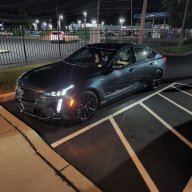
Having ChatGPT write forum posts...I admit I didn't see that one coming.
 

Double Your Chances!

Supporting Vendors

Apex Wheels

Exhibitions of Speed

Signature Wheels

V-Series Marketplace

Advertise with the Cadillac V-Net!

Torque Shop

Our Partners

Back
Top Bottom