Welcome to the Cadillac V-Series Forums!

Thoughts on oil type/weight for 5BW?

Motul Xcess 8100 X-Clean is the only 5w40 I can think of off the top of my head that's Dexos certified for gas.

What are some others?
 
I have Mobil-1 5w40 on hand as it's what I used before going to Motul 300V 5w40.

There's also Royal Purple and Royal Purple XPR, but the XPR may be a racing oil without detergent additives. There's RedLine, Amsoil, Liqui Molly, Valvoline, Pennzoil and others. Just do some Googles searches.

Mobil 1 5w40.jpg
 
Mr. Blkout, my comments are directed at the topic of discussion, not you, so please don't take offense.

For the 4BW, the OEM oil is 5w30 with a revised recommendation to use 5w40.

The 0w is for EXTREMELY cold environments, like -20 degree Minnesota winter mornings. The 0w number only relates to your cold start. The 0w number has nothing to do with tracking a car. For track use it's the second number you raise, not the first one, so you'd want a 5w50, or a 10w50 for the track if going further than the revised 5w40.

There is no reason, no benefit to using 0w40 versus 5w40 oil and there is actually a detriment. The wider the gap between the 2 numbers the faster your second number shears down to a lower protection level. 5w40 absolutely is better for the 5BW than 0w40, unless it's extremely cold.

Granted this thread was about the 5BW, not the 4BW, but the fundamental principles of oil remain the same.

GM gives the 0w40 recommendation knowing some cars live in Alaska and some live in Arizona. A car that lives in Arizona would be better off not using the 0w40. One last time, there is a very specific reason for the 0w number and that reason simply does not exist in Arizona or any other hot climate.

0W does have something to do with tracking the car. The larger the difference between the first and second number has an impact on shearing. When you're tracking a car you want less shearing so it would be preferable to run a 5W-40 or 10W-40 over a 0W-40 but for normal driving, there's nothing wrong with running a 0W oil and might even provide arguably slightly better startup protection.

For example:

A 5W-40 oil spans a 35-grade spread, whereas a 10W-50 spans a 40-grade spread. Because a wider viscosity index span requires more polymer Viscosity Index Improvers (VIIs), a 5W-40 typically uses fewer VIIs than a 10W-50, making 10W-50 more prone to polymer shear breakdown under high mechanical stress unless supported by a robust synthetic base stock.

I'm not saying the second number doesn't matter either depending on your race conditions. Under extreme loads like towing or extremely hot track conditions the second number would provide better protection too, I'm simply saying that there's value in understanding that the first number matters also. For the most shearing protection you ideally want the two numbers as close as possible.


Last edited:
Funny subject for LT4’s.
My 2016 Z06 came with M1 5w-30 & my 2017 ZL1 came with M1 5w-30.
I sold my ZL1 in 2019; but kept my 16 Z06 until recent.

I switched the Z06 to M1 0w-40 Supercar because my 22 5BW came with M1 0w-40 SC and was easier to keep all the same oil.

I switched my 22 GMC AT4 with 6.2 to M1 0w-40 SC because all the BS with 0w-20. I traded it in Jan. My new 26 BWM runs 0w-12, for now, lol.

I still and will continue to run M1 0w-40 SC as long as they make it. I’m in Houston area and last week was high 90’s and expect some 100’s soon. All my cars sleep in a 75F climate controlled garage, which makes them and me happy.
Love it! Thanks for commentary. Im glad im not the only one messing with this oil weight stuff.
After all the discussions on this topic why are people still dropping the first number from 5w to 0w?

Unless it's negative 20 degrees, it's absolutely the wrong thing to be doing. Going to a lower weight oil provides better lubrication at start up in EXTREMELY cold environments. I'll say that again, 0w oil is for extremely cold environments! You are not doing your engine any favors by using it in summer or hot environments. If anything you should be going to a 10w40.
Your comment aligns with where my head is at honestly. Maybe ill be the guinea pig and run the 5w50 at my next change and report back...if I notice anything at all.

I find this to be an even more hilarious discussion with the 5BW. 668hp RWD and both stock tire options are summer max performance tires that are meant to be used above 40 degrees. Even higher with the Cup2R. LOL. I can loosely understand the corvette folks where you can get an all season tire on a non Z51 car from the factory. Not trying to hate on our northern breathern here who own and love the BW.
 
That's a good point, I don't drive my car when it's below 40. This being Louisiana, that's maybe one week of the entire year. Lol.

Save me please, it's so freakin' hot.
 
This is stuff I was referencing in my initial posted. Supposedly the new LS6 (in the 2027 corvettes) takes this now.

 
Damn, it's got a lot more of the good stuff in there and is significantly thicker at temp.
@blkout makes good point about the sheer though. Maybe the 45 delta between 5 and 50 is worse than the 40 in the stock oil?

I think im going to give it a go. Ill probably need a change in Q4 this year. Let me know if anyone switches to this new stuff first.
 
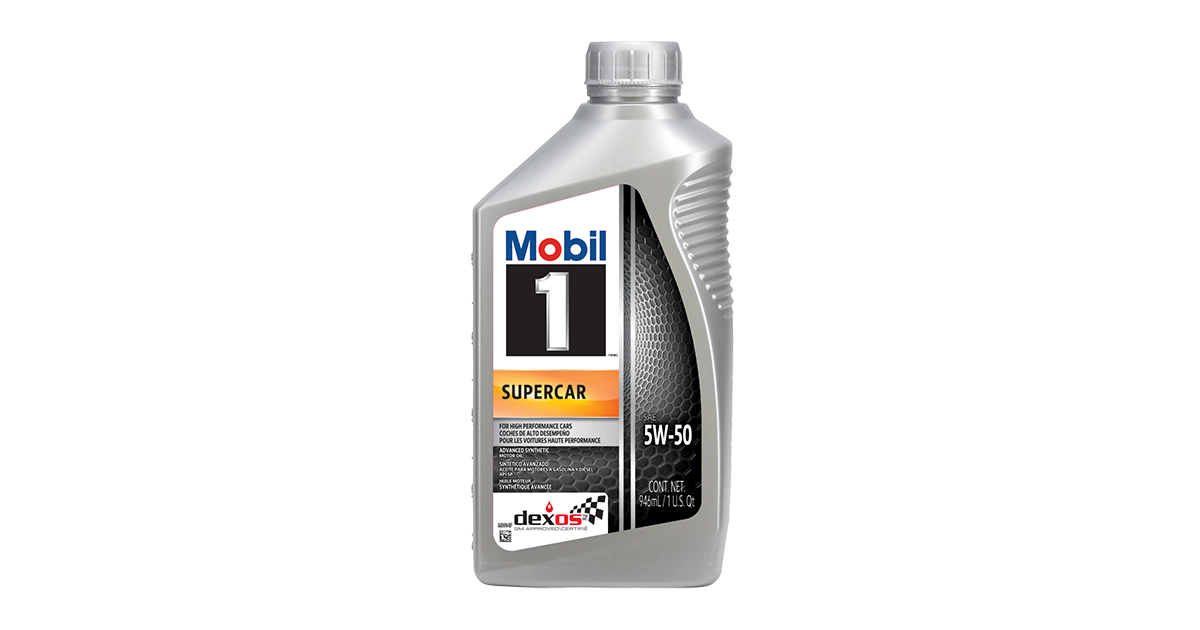
I'm presently using Motul 300V racing oil in 5w40, but next year I'll go to 5w50.

280 degree oil and 220 water temps are just a standard day at the track, so I'm going for the extra protection. There is simply no way the 50 will be too thick for the temps I'm dealing with. Every oil change goes to Blackstone labs for analysis, so hopefully I'll start seeing less metal in my oil changes with the Motul oils.


Oil change.jpg
Motul 5W50 300V.jpg
 
Right, as I keep saying it's very dependant on your exact situation. I'm fine running Mobil 1 0w40, it works in the temperature ranges I'll see when driving the car.

I also trust it to meet GM's specifications for emissions.
 
I'm presently using Motul 300V racing oil in 5w40, but next year I'll go to 5w50.

280 degree oil and 220 water temps are just a standard day at the track, so I'm going for the extra protection. There is simply no way the 50 will be too thick for the temps I'm dealing with. Every oil change goes to Blackstone labs for analysis, so hopefully I'll start seeing less metal in my oil changes with the Motul oils.


View attachment 35497View attachment 35498
Very nice. Keep us posted on the results.
 
I'm presently using Motul 300V racing oil in 5w40, but next year I'll go to 5w50.

280 degree oil and 220 water temps are just a standard day at the track, so I'm going for the extra protection. There is simply no way the 50 will be too thick for the temps I'm dealing with. Every oil change goes to Blackstone labs for analysis, so hopefully I'll start seeing less metal in my oil changes with the Motul oils.


View attachment 35497View attachment 35498
Word. I'm shutting it down at 270° with a 40w. 280° I'd use 5w50 as well.

300v is good stuff too.
 
blkout makes good point about the sheer though. Maybe the 45 delta between 5 and 50 is worse than the 40 in the stock oil?

I think im going to give it a go. Ill probably need a change in Q4 this year. Let me know if anyone switches to this new stuff first.
It's definitely worse. But you are starting your shear down from a higher number so you are always going to have better protection with the 50 in spite of the 45 spread. Just don't use this during your cold/winter months. And "winter" in Arizona isn't actually winter at all.

Test your existing oil and then the heavier oil. The results should shut us all up. We are all talking without real data. The oil analysis provides the proof.
 
@blkout makes good point about the sheer though. Maybe the 45 delta between 5 and 50 is worse than the 40 in the stock oil?

I think im going to give it a go. Ill probably need a change in Q4 this year. Let me know if anyone switches to this new stuff first.
Ya'll need to watch the video I posted. It's entirely possible that due to the grade spread on a 5w-50 oil that it will break down and only provide a viscosity of a 5w-40 oil soon after its used. The larger the spread between the two numbers, the higher probability of shearing. When that happens, the second number will have a viscosity lower than its rating. It would sound like 0W-50 would be the best for all but that's just not the case.
 
It's entirely possible that due to the grade spread on a 5w-50 oil that it will break down and only provide a viscosity of a 5w-40 oil soon after its used. The larger the spread between the two numbers, the higher probability of shearing. When that happens, the second number will have a viscosity lower than its rating. It would sound like 0W-50 would be the best for all but that's just not the case.
You are exactly correct and that's specifically why I'm preaching the 5w40. With your 0w40 you have a 40 spread, so it's going to shear down faster and more than a 5w40 with a 35 spread.

I also believe the 0w50 would be better even with the 50 spread. Yes, it's going to shear down faster, but it's shearing down from a starting viscosity of 50. After the shearing you'll still have more protection than whatever the 0w40 has sheared down to.

All this geek talk primarily applies to those pushing their cars hard. For the average guy just doing daily driving any decent oil will suffice.
 
I did, it was informative, and the Mobil 1 oils seemed to hold up pretty well.

One other thing to consider is I never make it to 5,000 miles between oil changes, usually 2-3k at the most, so the shorter intervals also help keep up with the integrity of the oil.
 
I did, it was informative, and the Mobil 1 oils seemed to hold up pretty well.

One other thing to consider is I never make it to 5,000 miles between oil changes, usually 2-3k at the most, so the shorter intervals also help keep up with the integrity of the oil.
If you're using any of the top oils, then changing every 2-3k is likely overkill. Have you ever done an oil analysis and looked at your TBN? If not, you might be surprised that you can probably go 5K miles without any issues. Exceptions would be if you're running high ethanol fuel in which case I would recommend oil changes no later than every 3K miles.
 
If you're using any of the top oils, then changing every 2-3k is likely overkill. Have you ever done an oil analysis and looked at your TBN? If not, you might be surprised that you can probably go 5K miles without any issues. Exceptions would be if you're running high ethanol fuel in which case I would recommend oil changes no later than every 3K miles.
I use Mobil 1 0w40, and I do it once a year, simply because I can remember that date.
My daily I do every 5k miles.
 
Torque Shop

Supporting Vendors

Apex Wheels

Exhibitions of Speed

Signature Wheels

V-Series Marketplace

Advertise with the Cadillac V-Net!

Our Partners

Back
Top Bottom